Category: improvement

  • Work

    I recently had a discussion with another officer about the value of work and the hours we spend in the office. This is relevant now as we spend most of our time working from home and finding balance between the activities done at work, those done at home, and the driving in between.

    The main points I brought up:

    • Why is the 40 hour work week a standard? Can we be more effective in shorter hours?
    • Related: Seth Godin’s book Linchpin discusses how modern public school is a model to get people working in a factory, not be successful or happy
    • What can we learn about effectiveness from Vilfredo Pareto?
    • Naval Ravikant thinks humans should be more like lions rather than cattle to achieve deep focus
    • Cal Newport makes the case for deep work versus shallow tasks
    • What happens if you turn off artificial light at sundown?
    • Did humans always sleep in eight consecutive hours?

    Question your assumptions.

  • WFH

    Since most if not all of us have been working from home, here are several more working from home resources you might find helpful.

    1. Stimulus check calculator: Washington Post & Go Curry Cracker
    2. Plex Live TV
    3. Plex coloring book (it’s fun for adults too!)
    4. MITRE updates and a white paper
    5. NPR Kids comic
    6. Frugalwoods reader suggestions
    7. Sal Khan on CBS News
    8. Levar Burton reads
    9. Marketwatch: A Recession won’t end the FIRE movement
    10. Art of Manliness: Kid Craft of the Week: Pencil Catapult
  • Python

    My first exposure to programming was, of course, using BASIC on my DOS 6.22 machine in 1995. Then I played around with C from a book my friend bought me. My last two years of high school found me learning the fundamentals of C++, but I didn’t get much further than simple if-else functions. This helped in college as I was required to take one semester of C++ which I basically slept through. It was interesting coding a program to calculate the trajectory of a cannonball based on certain inputs, but I don’t remember much else. Ok, I did just find eight .cpp files from twenty years ago, so I could use the gcc compiler on my laptop to see what happens.

    Seven or eight years ago, I started using Codeacademy to learn something, maybe Perl, but that didn’t stick. I had also purchased a book on Java and a book by Larry Wall on Perl, but didn’t continue learning programming.

    A few months ago, Tim Ferriss had a link to an essay by Paul Graham about writing essays. I could relate to Mr. Graham as he tweeted about his 7 year old feigning death at the elder Graham’s exposition about what writing essays entails (I have a 7 year old at home as well).

    Reading this essay lead me to Graham’s book, Hackers and Painters. This short series of essays talks about programming, creating wealth, the commonalities between (surprise surprise) hackers and painters, and how to start a startup. In one of these essays, an endnote points the reader to Eric S. Raymond’s essay “How to be a Hacker.” Raymond explains in his essay that hackers create, tinker, and share ideas whereas crackers steal, obtain illegal access and break the law. For more details, see Steven Levy’s book Hackers.

    Raymond describes four steps (not a complete checklist, but a start) to become a hacker:

    Basic Hacking Skills

    1. Learn how to program.
    2. Get one of the open-source Unixes and learn to use and run it.
    3. Learn how to use the World Wide Web and write HTML.
    4. If you don’t have functional English, learn it.

    I already use Linux on my machine, so I figured might as well start learning programming. Thankfully ESR doesn’t recommend going back to C or C++, but rather Python. Apparently one doesn’t need to manage memory resources or other overhead processes as much as C++. So I installed the python IDE on my laptop and started the Python 2 course on Codeacademy.

  • Cybersecurity?

    J.D. Roth recently wrote about his journey to finally use a password manager for his old and weak passwords. I know what this is like as I used a (password protected!) spreadsheet to track my passwords for years, which kept track of passwords that I generated when I was a teenager. I use Lastpass which is essentially $1 per month per device. Makes it very easy to create passwords of the max length allowed by the site and that are not easy to guess.

    In addition to a password manager, enable two factor authentication (2FA) for your accounts. This forces you to be more deliberate with your login procedures, but should prevent someone from accessing your accounts through password attacks. You can also stay logged in to an account so you don’t need to use 2FA each time, but if you forget to fully log out then you could be saving your account data on certain machines or profiles.

    To enable 2FA, you will likely get a text message from your account, use a code given by the system when you enabled 2FA, or use a one-time code from an authenticator app, such as Google Authenticator or LastPass Authenticator.

    To get even more complex, you can use encrypted folders on your local machine. I use ecryptfs which is relatively easy to install on Ubuntu based systems. The folder is decrypted each time I logon and encrypted each time I logoff. Windows 10 encrypted folders can be a little more complex and the types of encryption available vary based on the version of Windows 10 you have installed.

    Lastly, encrypted email is a next level to employ if you are concerned about Google, Hotmail, Microsoft, or AOL accessing the contents of your messages.

    More resources

    • Security ebook from ProtonMail
    • Open Source Intelligence (OSINT) techniques
    • Tools from the USA show Mr. Robot

    Update: I grew weary of Google Assistant listening to my conversations and making unwanted suggestions. Finally found a way to turn it off here.

  • Failure: Get Some

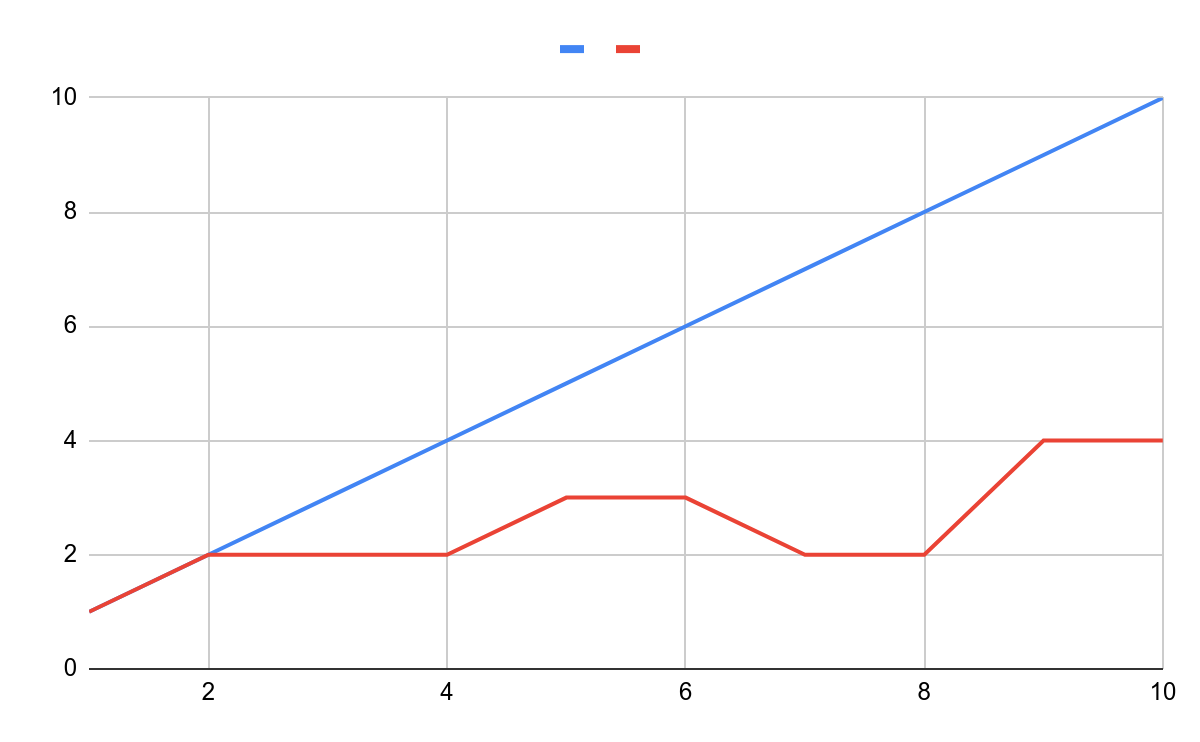
    I am a goal oriented person. I set fitness goals, financial goals, nutrition goals, goals for sleep, and (near-term) goals for my kids. As I’ve gotten older, I’ve come to the realization that most goals move from the linear progression to step progression. So rather than every event or every day being a “step in the right direction”, eventually you accept that some days are maintenance or strategic resets.

    Sometimes advancement is a slow, meandering red line.

    So I am trying to get more comfortable failing, specifically with respect to jiu-jitsu. I traveled to GB Pelham and for 105 minutes of the two hours I spent there today, I felt like I should take a few stripes off my belt. [In case you are traveling to Alabama, the staff and students are very welcoming and helpful. And there is a lot of cool GB/BJJ info on their site.] But I finally made a modicum of progress in my last roll. So I’ll keep failing and coming back for more instruction by those better than me. We have to be comfortable failing in safe environments so we won’t fail when times are truly stressful.

    I’m normally the guy getting his face smushed. Photo from Pexels.

    For my own review (and maybe yours!), here’s what the professor covered today:

    • Closed guard to arm bar
    • Closed guard to teepee
    • Closed guard to scissors sweep to reverse sweep

    Here’s what I learned: when you are mounted, keep your arms tight to your chest and don’t reach around your partners head.

    Here’s what I need to practice more:

    • Single leg takedown
    • Escaping closed guard
    • Hip escape/shrimping from bottom

    I think if I stick with those three, everything else will be cream cheese.

  • Squat elbow bicep pain

    I have been experiencing left elbow and bicep pain when I squat over 300 since last spring. I think I found the reason why:

    https://www.instagram.com/p/B3fGRpaAt_r/?utm_source=ig_web_copy_link

    Thank goodness I found Coach Niki Sims post!

  • Garage Gym, phase 4

    After eight long years, I finally built the lifting platform I had read about and dreamed about. Thanks for a 3 bay garage, temperate climate, and the Art of Manliness, I completed the 8’x8′ platform in my garage.

    This is my garage before I built the platform.  You can see the horse stall mat in disarray.
    Before building the platform.

    In October I started compiling the pieces by buying a use squat rack on Craigslist for $80. Then Dick’s had the barbell set and some pads. I bought a flat bench, weight rack, extra barbell, bumper plates and better clamps for the ends of the barbell. We were near a Tractor Supply a month ago, so bought the two 4’x6′ mats. Today I finally rented a truck from Home Depot, bought four OSB boards and one oak plywood board.

    Total costs below. I didn’t count the screws or the bit holder for my drill as these will be used for other projects. I used 1″ screws for putting the OSB together and 1 1/4″ screws for screwing the rubber mats into the OSB and the plywood into the OSB.

    I went with the OSB instead of plywood as they had this in 5/8″ and the Home Depot lumber expert mentioned that it deals with water better than particle board. I also chose the oak plywood as opposed to fir, since I figured that I’m here and might as well spend the extra $20 now and not regret it in 6 months. And then I talked to a coworker who informed me that it is only an oak veneer on top, so maybe I paid extra for something that didn’t matter.

    Just getting the boards out of the truck and arranged on my garage floor was a workout. Finally got the OSB arranged and ready to be screwed together.

    Right angles are your friend.
    I didn’t have a long straightedge or someone to hold the chalk line so I measured 1′ increments to lay out the grid.
    Using the carpenter’s square to space the screws.
    The finished OSB screwed together.
    Next the screwed in plywood, only around the perimeter.
    Finished layout.

    I used some extra rubber mat pieces to prop up the weight rack off to the right and some other to protect the floor from weights. Brett McKay and Matt Reynolds said they did it in an hour, but it took me the better part of a day. Other note: I did not bolt the squat rack into the platform as I am leaving room for potentially buying a sturdier rack in the future. This one only holds 300lbs so I’m close to maxing out this one’s capacity for squat.